
Everything You Need For Good Mental Health.



See Our Latest Blogs
Stay up-to-date with our latest insights, tips, and trends by diving into our newest blogs. Whether you're seeking industry expertise, marketing strategies, or product inspiration, our blog section is your go-to resource for valuable content.
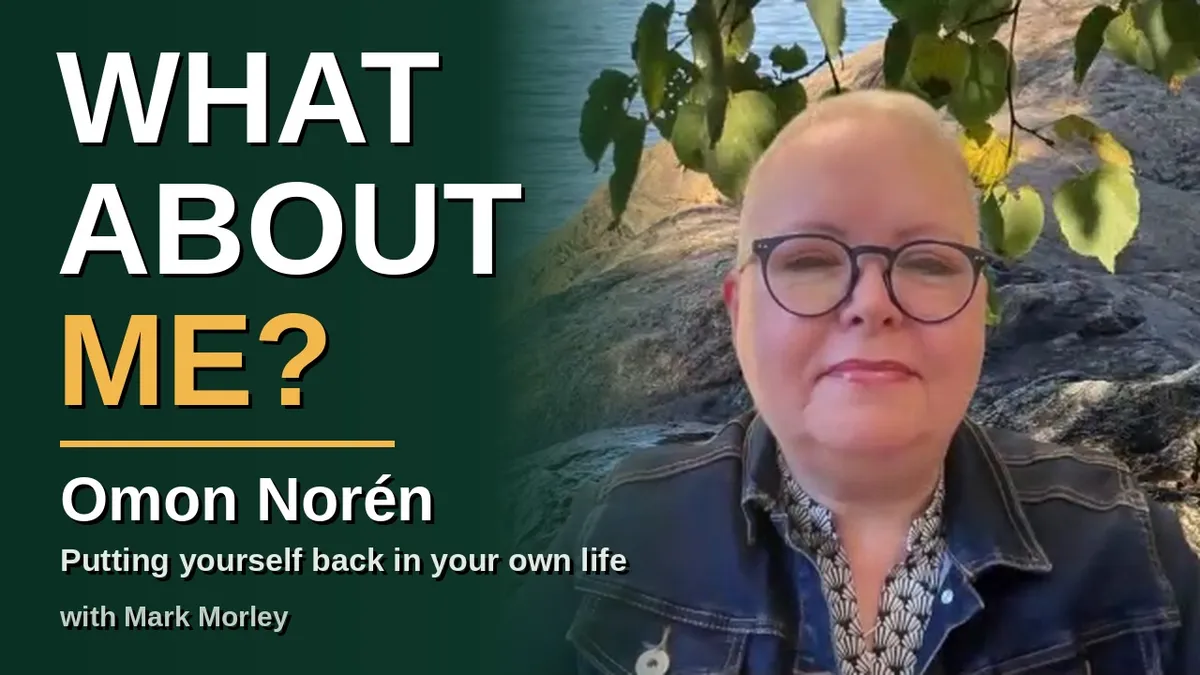
What About Me? Putting Yourself First with Author Omon Norén
In this episode of Every Mind Matters, Mark Morley is joined by author Omon Norén to talk about her book What About Me, a short and easy to dip into book for anyone who spends their life helping everybody else and has put themselves on the back burner.
Omon reads from several chapters and explains the thinking behind them. Together they explore why asking "what about me?" is not selfish, how a small pause can change how we respond, and why we do not have to be ready before we start making changes.
What you will hear in this episode
The two forewords to the book, from Lori Hammond and Linda Joelson
Who the book is for, and why caring people end up with nothing left to give
Viktor Frankl and the space between what happens to us and how we respond
"When did I become the one who stayed behind?" and the moment you realise you matter
When life stops fitting: the coat analogy for change
Why you do not have to be ready, and why we are always ready for others but not for ourselves
Choosing where your energy goes
How, when you change, the people around you change too
Life happens for you, not to you
How writing the book showed Omon how much she already knew, and why you may have a book in you too
Key moments
0:53 The two forewords
5:08 Who the book is for
7:38 Viktor Frankl and the space between
10:45 Chapter 1: What about me?
12:54 Chapter 2: When life stops fitting
16:41 Chapter 4: You do not have to be ready
23:02 Chapter 7: Choosing where your energy goes
27:11 Chapter 10: When you change, others feel it
32:15 Chapter 14: You are not done
39:55 Writing the book
43:50 Reader feedback
48:05 What is next and where to find Omon
"It's not selfish. It's the discovery that you matter." Omon Norén
Related reading
Omon talks about people-pleasing, living on standby for everyone else and the 'what if' habit that keeps us stuck. For more on that, read How NLP Can Help With Anxiety and What Is NLP?. If anxiety is affecting you, see Anxiety Treatment in Newcastle.
Video Transcript
So hello and welcome. And today it's my privilege to be talking to the lovely Omon Norén who has written a fantastic little book called What About Me? And there's my copy. Welcome. Nice to see you again. Thank you so much, Mark. Happy to be here. Good. Good. And I love this little book. I find it really interesting in quite a few little ways. and that first of all you can read each chapter one by one and get something out of it that you can use. You don't have to read the whole book to then go in and do it. And almost every chapter's got something really powerful in it.
So it's a nice little book to pick up and put down and read it again. and the first thing I want to go over is you've got two lovely forewords here.
The two forewords – Lori Hammond and Linda Joelson
One by the amazing Lori Hammond. I don't know how you managed to swing that but Lori is very famous within the hypnotherapy world. She is and she is such a brilliant person. For those who does not know who Lori is, she used to be a hairdresser, a top quality hairdresser, and then she decided that she wanted to do hypnotherapy. And she now has a community called Trancey Tuesday where she teaches us new things, new stuff all the time. And she's so generous with her time and brilliant in what she comes up with. So, it's a true pleasure and I had the privilege of meeting her because she was on a boat tour and it stopped in Stockholm.
So, I actually got to meet her and we spent a day in Stockholm and I showed her our famous outdoor museum Skansen and that was one of the highlights in my life I think. Yeah, Lori is one of the most inspiring people within the hypnosis community and that's a really good community. But to see what Lori does and she's always positive even when she's had some rough times. She's just such an inspiration there. So, first of all, do you fancy reading Lori's foreword because that says quite a lot about the book. I would love to. I feel truly honoured to have received an advanced copy of Omon's book.
I found myself nodding and thinking, "Yes, this is exactly what we need to hear right now." Omon shines a light on the fact that discomfort can actually be a signal that we are ready for more. What if we are more ready than we realise for the beautiful life we've been putting on the back burner? What if our Sunday is now? This book feels liberating as Omon shows us how to step back from trying to manage everyone else so we can freely author our own lives. Then she shows us how to actually do it in a way that feels more like a get to than a have to.
Thank you for the difference you are making in the world Omon. Lori Hammond, professional hypnotist. So, I think that sums up the book really well. It's kind of like one of the best descriptions I've read and it's just to have that from Lori as well is a huge win. It's wonderful. and then you've also got another one from Linda Joelson who I had not heard of. Do you want to read that as well? I'd love to. Omon Norén has written a book that will take you by the hand, opening space for something grand. As Vygotsky once emphasised, the individual's active role in their cognitive development, this book heeds the options of taking small steps with time for reflection that can take us far.
I am thoroughly grateful for this book and anticipate that the resources it brings into play for the reader will have the capacity to actively shape the future. Prepare for a genuine shift. Linda Joelson, PhD. Excellent. Excellent. So, who is Linda? Not heard of Linda before. Linda is a priest in the Swedish state church now, but at the time she was a colleague of mine and she's also she's a really good theologian and she has written the latest translation together with some colleagues of the New Testament in Sweden and so she has a thorough academic background and I thought it would be very nice to have people from different walks.
That's good. Yeah, two brilliant forewords. You're really lucky to get those. So, tell us a little bit about the book. The book is how you start to include yourself actually because that's the theme that runs through it, but it's not explicitly said out loud.
Who the book is for – learning to include yourself
So, it's for anybody. I target women, so to speak, but it's for anybody, man or woman, who one day realise I'm helping everybody, but not myself. I'm there for everybody. I'm ready for everybody. Call me in the middle of night and I will help you. I will come to you. I will do whatever you need. And somehow in doing that, we put ourselves on the back burner. And it becomes such an automatic response that it can take years before this little sentence creeps up. What about me?
And it's almost really one that is prohibited. Can I even say this? Isn't this being really disloyal to everybody else? I feel like I should be able to do this. Yeah, I think that resonates with a lot of people because there's a lot of people out there who do care, especially parents, and they care for other people and they care for the people around them. And then I see this with clients all the time is that they're not taking enough care themselves. Yeah. Because it's like I can sacrifice myself. It doesn't matter. I'm not that important. But in doing so, in the end, there is nothing left.
And when there is nothing left, I can't help anybody because I don't have the strength. I don't have the fortitude, the possibility. And then who have I helped? Yeah. Yeah. It's a really common theme that we see with people. And of course, if we're caring for other people, we have to put ourselves first because if we don't, we can't care for all these other people. But as you mentioned in the book, people feel a little bit selfish by taking a bit of time for themselves. I'd say we feel a lot selfish, not a little bit selfish. Yeah. Yeah. Really good.
Really good. So, what I'd like you to do for me is chapter one, I believe. Oh, no, it's not. It's before you begin. Before you begin. Before you begin. Yes.
"Before you begin" – Viktor Frankl and the space between
So, could you just read that for me? because I think this is a really good a really good little snippet. I think so too. but I'm biased. Viktor Frankl wrote about the space between what happens to us and how we respond. A space where choice becomes possible. And Viktor Frankl, he lived between 1905 until 1997. He was an Austrian psychiatrist, neurologist, and a Holocaust survivor. During his imprisonment in Nazi concentration camp, he observed that while much could be taken from a person, the freedom to choose one's attitude and response could not.
It's really interesting. So, I really like that bit about we have that choice of how we respond to what's going on. So, he went through a really tough time, but he still managed to be in the space where he could respond rather than reacting. Yeah. And that's very, very powerful. And again, I think that comes back to when we're looking after other people, a lot of people don't respond. They just do what they think they have to do. And it's nice that we could actually have that choice. I think that's the probably the one thing that is the most important to realise that we can have that choice because when you if you help somebody, if you care for another person, sometimes when you do that long enough and all sorts of the hours, our doing is so automatic that we stop thinking.
We just do and then to have that pause it doesn't need to be big but just to realise I can do something differently that is a game changer. It's interesting when we work with clients or we work with people and they've got a problem and then when you introduce the idea that they've got a choice that they have choices how they feel and what they do that kind of wakes them up just a little bit. And sometimes it's terrifying to realise I do have a choice. That's it. It's really interesting. I know both Walt Disney and Richard Bandler both talked about this.
Walt Disney especially said most people were like lawnmowers just going back and forwards every day doing the same thing. And then he talked about there's some people out there who were builders and creators and have got the choices. And he was definitely one of those. He just didn't go back and forth every day. He was out there creating something amazing. So yeah, I love that bit that we've got that choice. That's really powerful. So then if we move on to chapter one, just page one.
Chapter 1 – "What about me?"
I love this bit as well. Could you just read that for us as well? Yes, just that page, right? Yeah, just page one. It'd be great. What about me? There is a moment when you're standing in a crowd watching other people move on with their lives and a thought appears that surprises you by its honesty. When did I become the one who stayed behind? It doesn't arrive loudly. It's not dramatic. It's just there hovering. And for a split second, you see yourself from the outside. Before that question forms, there is usually something else underneath it.
a sense of abandonment, invisibility, and often a quiet fear that even asking the question would make you disloyal to others. Asking what about me is not selfish. It's the discovery that you matter. So the amount of people who explained that moment to me over the years that they've been a wife, they've been a mother, they've cared after the kids, and then suddenly they all disappear off to university, get jobs, move out, and it's just that little realisation. Yeah. What about me? And have you been through that yourself? Yes, I have. I was a caretaker of my disabled husband for many years.
I wasn't alone in this but sometimes when it becomes all about somebody else it grates on you and it starts to go I want to help this person but what about me? Yeah powerful moments I think. So many people have experienced that in their life. And yeah, you put that so perfectly. Beautiful.
Chapter 2 – When life stops fitting (the coat analogy)
And then if we move on to chapter two, when life stops fitting, I'd like to read a bit of this for people. yeah, if you'd like to read that first bit down to I got it. You've got it. Good. Yes. There is a particular kind of tiredness that has nothing to do with sleep. It is the kind of tiredness where every day starts to look the same and you feel exhausted even before you rise. Not because something dramatic is happening, but because nothing is. At first, it's subtle. life starts to itch and you find yourself looking for an exit, something that might break the monotony or give you back a sense of aliveness.
You may not know what you want instead. You just know that what once worked no longer does. So that is an interesting moment for people as well where they suddenly realise things just don't fit anymore and it's so uncomfortable. It is uncomfortable and I think sometimes when people are always against change quite often unless it's very uncomfortable. Yeah. But yeah, it's just nicely put that you go through life and then suddenly you realise something's changed. And I could be wrong, but I think in those moments, you really do not know what you want instead.
You just know that this does not fit any longer. This is something is off. Yeah. And I think some people go through a bit of mental anguish there because they don't want that to change or to stop. Sometimes that change can be perfectly what people need. It so often is and there is a saying that the only thing we can be absolutely sure about in this life is that there will be change and that is such a profound thing to say but it's really obnoxious because when it does happen we don't want it. Yeah it is funny how resistant people are to change.
we're seeing it at the moment in UK schools where they've changed the diet to make it a bit healthier and a lot of the parents are really screaming about that change. It's just a tiny little thing that's beneficial for the kids, but people really don't want that to happen. They scream bloody murder. It's a nice way to put it. But yeah, maybe we do need to embrace change a little bit more. And you use a nice analogy further down about a coat. Yeah. Tell us a little bit more about that. Yeah. It's like you have a coat. You think of your life as a coat and you've been in your coat.
You love this coat. It's really pretty. It's comfortable. And you're used to it. And suddenly it starts to itch. It starts to chafe. And you even discover there are holes in it where there weren't any holes before. And usually when that happens, if you have a child that grows, there isn't anything complicated. You go out and you buy a new coat. Yeah. But when we grow up, we sort of expect that this coat is going to serve us for the rest of our life, regardless of how much change is around us because we're used to this coat. We want it to fit.
That's it. And again, it's about change. A lot of people don't like the changes.
Chapter 4 – You don't have to be ready
Bonkers. And then if we move on to chapter four, you don't have to be ready. This fits in quite nicely. If you'd like to read that page 11 for us. Absolutely. There is a particular way of living that looks responsible from the outside but feels strangely empty on the inside. You are in constant standby. Always ready to answer questions. Always prepared to do what needs to be done. You're available but not present. Competent but paused. In Sweden, we have an expression for this. You turn your hat depending on what's needed. You flip your hat. You become the CEO, the worker, the helper, the fixer.
You respond. You deliver. You adapt and you get really good at it. But somewhere along the way, you begin to realise something uncomfortable. You're always ready and still not living your own life. And most people justify this state without even noticing that they're doing it. Yeah. So, I think that's really good advice. that things change and we don't have to be ready for it. No. And actually when we do, how did you put it? The hat. You flip your hat. You flip your hat. Yeah. The funny thing is you don't have to be ready. But when we help other people, we are always ready.
You come to me and say, "Can you help me with this?" And I say absolutely. But we do not have that readiness for ourselves. And it's not like it's hard. It's like a yes or no. And it's amazing how adaptable we can be. But as you mentioned, when it's helping other people, we just go and get it done. But when it's for ourselves, we can struggle a lot. Yeah. Yeah. I had this really cool example just a week ago or so. I was doing something with a computer. I needed to find something, you know, building a website or something. And suddenly I hit this wall.
Oh, this is difficult. I don't want to do this. And then I thought because I've been living my book some for some time now. If somebody else came to you and asked for help how to do this, you would push through. No doubt. So I figured, okay, why don't I pretend that I'm somebody else and push through? And I did. It went very well. I was pleased with the result. But it just highlighted the fact that we're always ready for others, not so much for ourselves. Yeah. Sometimes I think maybe we overthink it as well when we do with others. We get on and do it and then when it's for ourselves there's that I don't know people call it a mental block but I think it's just that hesitation.
Yeah. And somehow we're reluctant to do it for ourselves. Why do you think that is? There could be a number of things but we are very good. Most people are very good at imagination. But when I say that, it's about the imagination of worrying. What if this happened and then this could happen and then this terrible thing could happen. It's the same imagination that you use. What if this happens? That's really good. And then this could happen. And so I think if I don't do anything for myself, nothing happens. and then I'm sure nothing bad will happen.
Yeah. Yeah. It's like a self-fulfilling prophecy. Yeah. And actually that's what I find working with anxiety clients is always what if and I say what can we just change that to and it seems so simple but then when we same process we just call it future pacing. It's just what if this comes for the better. And it is amazing because somebody I used to work with years ago, he used to say from every problem comes something positive. Yeah. And it's just searching for that. So again, it's changing that what if this is going to do something better. And quite often a lot of success in life is when people sort of determine they can see a challenge or a problem and turn it into a solution.
And we get excited about that rather than just thinking about the negatives all the time. So yeah, you don't have to be ready and we're very flexible. We can just turn our hand to almost anything. And I love that flip your hat. That's not something I've heard before until I read the book. Okay, cool. Because I thought it was sort of like worldwide, but yeah. No, it's it must be a Swedish thing, but I'll start using it. We have a famous Swedish author called Astrid Lindgren. She's not alive any longer, but she wrote Karlsson-on-the-Roof, which is a little man has a propeller on his back and he jump.
It's a children's book and he has this friend 10-year-old boy and he gets into all sorts of mischief and sometimes he would have a propeller on his cap. So I think maybe I don't know if the story came first or the expression came first but it's sort of interchangeable but it is very true and as NLP practitioners when we work with people we quite often go looking for their resources. And I think everybody has different roles within their life, but they're not aware of them. And just tons of rules. Yeah. And when we make them aware of the skills and the abilities they do have, that totally changes things.
So again, it's the perspective, the way we look at things. Yeah. So yeah. No, every chapter is a good one in here. And now we're going to move on to chapter seven.
Chapter 7 – Choosing where your energy goes
When I can find it. Choosing where your energy goes. This is a good one. Yeah. So, I'll read a little bit from this one. Great. Choosing where your energy goes. There is a moment that can feel both ordinary and a little unsettling. It's another meeting and another one on top of that. Suddenly, your energy is just gone. It didn't fade slowly. It disappeared. And with it, your clarity. Things you knew 5 minutes ago are suddenly behind a kind of wall of forgetfulness. then in itself can feel a little scary. Usually we explain it away quickly. I didn't sleep enough.
I had too much to do. Of course, I'm tired. And sometimes that's true. But often it doesn't quite explain the suddeness of it. Energy doesn't disappear randomly. It hides behind all of the quiet demands we place on ourselves, the hidden agendas, the musts we live by. And this is quite interesting that we can choose where that energy goes. Yeah. How would you explain that better? Well, first of all, you have to become aware that you have energy. And for the longest time, I didn't I'm the person I do a lot of things. And sometimes I couldn't explain why am I so tired?
I don't I haven't done anything. And then I started to think, okay, I had this meeting. I talked to these people. This was this problem. And everything has a energy cost. Even things that are fun can have an energy cost. And when you do a lot of them, it takes a lot of mental energy. So it's not like you go out into the forest and you chop down logs. That would be very easy to understand what when you go home and you're dead tired. But when you deal with people or you deal in a family situation, you solve things all those things takes energy. It's just that it's not visible at the end of the day.
So you think I haven't done anything. On the surface it looks like you haven't done anything but you've been through lots of processes. You've done lots of mental thinking, problem solving, kids with their homework, making dinner, making sure everything is right on time. You have your potatoes and you have your meat and you make sure it's ready at the same time or your vegetables or whatever resonates with you. But they're all processes and they take energy. Yeah. Yeah. And the other thing I like which is discussed a little bit further in the chapter is when you choose where your energy goes can greatly change how we resolve problems.
Yes. So typically when clients come to see us they're sort of coming in focusing on the problem. And old fashioned therapy we know would focus on that and talk about that again and again. But the modern therapies that have proven to be much more effective like NLP and hypnosis is we focus on how we want to be instead. Yeah. And if we put that energy into resolving the situation rather than focusing on the problem, we see much faster results. And also most of the time the problem isn't the problem, it's something else which we solve during all this.
Yes, I'll definitely agree with that. A lot of clients that I work with are coming in with a problem and that's not the problem at all. It can be the attitude. It can be the focus. It's a symptom of something else often. Yeah. Yeah. That's one of the things I love about NLP is that we're looking at it from a totally different perspective. Not on the problem, but yeah. Moving that energy is a really big thing to do. And then if we move on to chapter 10, this is a good one.
Chapter 10 – When you change, others feel it
Get that chapter 10. When you change, others feel it. So, would you like to read page 30 for us? I'd love to. Something subtle begins to happen when you stop being over capable. When you don't act first, when you don't rush into rescue, when you pause instead of anticipating, people around you begin to change, too. They take more responsibility, they take more action. They begin thinking for themselves. And while that shift is healthy, it rarely feels neutral inside. It often feels uncomfortable simply because you're not used to doing things this way.
When you don't step in, a quiet fear can surface. If I'm not useful, maybe there is no place for me. What will they say? Maybe they won't like me anymore. For a long time, usefulness may have been the glue. Helping, fixing, anticipating and that's how the connection was maintained. So when you say when you change other feeling, others feel it. Let's go a little bit deeper there. What you mean about that? When you stop being the helper, the rescuer and you start taking that energy as we just spoke about and putting on yourself on your own what you do and what you don't do.
There is a very visible shift because people are going why doesn't she step in? Why doesn't she say something? And in the beginning they probably won't even say something. They just notice it without noticing it. And so they start doing things differently because you have shift shifted. So if you want to do something to change the world to get yourself to a good place a healthy place mentally and so on. That's how you do it because the only person you can help and really affect is yourself. Yeah, definitely. Definitely. And it is interesting in that role of a carer where you're giving everything to everybody else.
Sometimes we stop them from helping themselves. Yes. Which I see quite a lot. and if we change a great example was I had a business years ago and I was just fixing problems within the business all the time. And when I changed to the staff and said, "Just give me half an hour. I'll finish something else off," they would then go and move into the mode of trying to fix it themselves and they learned a lot more from it. So I was actually holding them back by doing everything. And I think it happens in so many different roles. But then it seems to also be magical that when we change how we feel inside, it doesn't just change people, it seems to change everything.
It's like, you know, if you work in a place and you have this person who's always there who does a lot of things and suddenly for one reason or another this person perhaps retires or go on a vacation and people who have had so much respect and love for this person and still do they find like you just said they find that okay we have to solve this ourselves. And it turns out that they're highly capable too. So not being there for everything, not helping for everything can actually be a really good thing. Yeah. Yeah. In fact, a lovely little story was I was working with a gentleman recently and he's got a business and he's trying to sell it, but his biggest fear was the staff can't do this without me.
Classical. And we just I just went. So right, so what is it we can do? what could you be doing to move things forward? And he wasn't doing anything to move things forward. So, he's then gone and he's worked with the independent members of staff and got them now doing this and that's now all gone through nicely. But sometimes when we stop doing things, we upgrade other people around us. Yes. I like that we upgrade other people around us. That's wonderful. Yes. Yeah. It's very easy as a business owner to do everything for everybody else when they get stuck and it's kind of we have to step back and let people learn and Yes.
Oh, great. I quite like that as well. It's a nice one. So, yeah, that's good. Okay. And then we move on to chapter 14.
Chapter 14 – You're not done (life happens for you)
You want me to read this? Yes, if you could read page 44. You're not done. I like this one. Metaphor. The road ends only when breathing does. I am here, right where I'm supposed to be. When I stop believing that I should have been further along by now, something softens. When I stop measuring my progress against other people's progress, I feel the tension loosen. That old cramp loosens, the shoulds and the musts ease their grip and life feels breathable again. Instead of being done, life comes to me. I can and I'm allowed to change at any time.
I can even change with every breath I take if I so choose. There is no finish line to reach while I'm alive. What tells me that I'm still becoming is surprisingly simple. Every time I notice the smallest change, I'm reminded that I'm alive and still becoming. So that's a really nice attitude. Tell us a little bit more about why you wrote it like that. I think I'm a Christian, but I wrote I read this somewhere that Buddhist belief and I'm on thin ice now because I'm not sure look more on it like life is coming to you instead of life is disappearing. And I rather like that thought and it resonated with me.
As long as I breathe, life is actually happening for me. And that's also not to me but for me. And that's a very important mental change. Life happens for me and it's coming to me. And if it's coming to me, I can change anytime I want. Definitely. Definitely. So Tony Robbins frames that slightly differently. Okay. He says, "Life doesn't happen to you, it happens for you." Yeah. And I think that's right. Sometimes things go wrong and we don't see the good in the picture. But yeah, it's all about everything we go through we learn from. Yes, it's because when it happens to you, to me it sounds a bit like you're a victim.
And I'm not particularly fond of a victim. No, life happens sometimes really bad things, but there are still things you can learn, evolve, and so on. And therefore it's more for you than to you. Yeah. I think if you think you're done then you definitely are and of course you're programming your mind and your body with doing that. But when you say we're not done and there's still a lot more to go for. it makes such a difference mentally and I do see that with people that some people get old before the time. Yeah. Yeah. I know what you mean. It's Yeah.
my mother was a bit like that. She just kind of, well, that's it. We're done. We're finished. Where other people are the same age, in fact, her mother, her mother was amazing. She lived to 94 and she was always full of energy and going out and exploring and doing things. So, it's funny the two of them were very similar, but one I also was younger just because of her attitude. Yeah. And do you find that in your role with your work that people do that don't mention any names? No, I won't. there is a tendency I think not just in my work but for everybody it's more what I hear is more life happened to me than for me.
Because I think if you say for me that's unusual. So you need to choose that actively otherwise maybe even linguistically it's easy to say life happened to me like just things happened and that could also be if you choose to change it or choose an identity of regarding things in a different light and a lot more active than everything. I'm just a passive onlooker. Things happen to me. So, doesn't m doesn't matter what I do. But when life happens for me, that's for me that's linguistically more appealing. Yeah. And you mentioned that victim mentality.
In fact, somebody I was very close to for a long time, she always saw herself as a victim. And she seemed to attract more problems. Yes. Magically to her. And she just hit everything with that attitude is that I am the victim here and I'll always be the victim. And I think and I could be wrong here, but when you have that attitude, you invite problems. I've seen people because I've been thinking why is it that certain people have a tendency to have more accidents more bad things happening in their lives than other people. And I think when things start to go wrong and you adapt that thinking somehow you open the door slightly as you are and things come.
I don't want to put it like it always happens that way, but there is a certain bit of mentality I think that you Yeah, I'm sure about a decade ago they did a study and I don't know how they did this, but it kind of came down to people who believed they were lucky seemed to get more lottery wins on scratch cards or things happened in life that came to them, whereas people who were unlucky actually were. They've somehow ran the studies and found that people who believed they were lucky actually were. Now I don't understand how this works. But we see it again and it definitely happens with people.
And something we do regularly is we look at our wins. It's part of our daily process. And for some reason when we start looking for what's going right and what's working first of all that seems to change people's attitude. I do this with every client I work with now. But then also it seems to attract more things to us and just that tiny little shift of you're not done. There's always something to learn from our experience. In fact, again, Tony Robbins talks about that there's no such thing as failure. There's only a learning. We learn something from it.
Yeah, I love that. It's really good. So those are the bits I wanted to cover today because it's really good. And again, I've got to say it's a nice easy read. Every single chapter has something of value in there that you can go and start using straight away. It is something I've read a couple of few times, you know, because that I keep getting more out of it and it you don't have to read the whole book to get out of it, but it must have been an interesting process of you putting this book together.
Writing the book – discovering how much you already know
So, what did you learn about the process of doing this? It was funny because for many years I thought I would write a book and then I put it like no I won't do that and then we in the Game Changers Academy had the possibility of learning how to write a book and so I jumped at that and the thing that I found and I think this is true for everybody because I had chat GPT ask me a lot of questions. And when it did that, I realised I know a heck of a lot more things than I thought I do. Because often the knowledge we have and carry within us, it's so natural.
The wisdom we have learned over years and the way we are, it's so habitual that we don't think about it. until somebody questioned us or asked, "But why?" And at least I went inside and I started to think, really think? And it wasn't that obvious as it was when I first replied. And you go, "Ah, but what about this?" and how and then I realised that I had more knowledge what I than I thought I had about this particular subject and that was really an eye-opener and I think anybody has their own version they have their own book in them because of the life they have been leading.
So I was privileged enough to be able to write this book. I also had a lot of hardship because I discovered during the editing that I got cataract. So I had it was a interesting process to say the very least. So pros and cons. Yeah, I think it is interesting because we've been encouraged to write these books and that we're using AI not to write the book but as to ask us questions to write the book and it is interesting that when we ask those questions it's like having another observer there and you realise you do have all these skills and abilities and especially in your role of what you do.
We don't really realise how many skills and abilities we have. Exactly. And that's one of the basis of NLP is that we start to view things from totally different angles. Yeah. And I want to say this very clearly that everybody has lots and lots of resources. What we all need help with is the possibility to bring them forth. But a phrase that I really dislike is people are broken. No, they're not broken. No, that they are in difficult places and so but they're not broken. They have wonderful resources but they may need help to access them. And again that's kind of people are focusing on the negative on the problem rather focus on all the and we've been trained over the last decade or so to look for all the negatives.
COVID lockdown especially trained an awful lot of people to keep looking for all the stuff is constantly negative as well. all the media, but there is when you look for them, there's a lot of very beautiful, wonderful things out there, you know, and everything can't be perfect, but we just need to focus in the right areas. And that's definitely one of the things this book does. It just changes that perspective, one small chapter at a time. And I know you've had some really good feedback about this. Tell us about that.
Reader feedback – how the book is travelling
I had one lady, she's also a hypnotist and I didn't know that she had bought my book and what it did for her. The she wasn't used to my language. So, she started to think but I can do this. I can write a book and many things apparently cha shifted when she read it that she got a lot of value out of it and she also was looking into a new niche where she wanted to do that. That's amazing. Yeah. Yeah. I can totally relate to that because within five minutes of starting this book and I'm thinking, oh well, if she can do that, I can do this and I know Ryan's been encouraging us to write a book.
So, I did start on that process. So, it is very inspiring, but it's so nice. And again, I don't think we recognise this. The stuff that we do helps other people. Yeah. In a nice way. And that's really good. And yeah, you don't need to sell many copies, but you never know how many people. No. No. And the thing is I'm starting to realise it's finding its way into different people's lives. I had one friend in Canada who gave the book or lent the book to his daughter who needed he said read this chapter because I find it very valuable and she did and I think she was helped.
Another one came and said oh this sounds really interesting. I explained what a book was. So, I'll pass it on to my daughter, but first I'll read it myself. So, it's really nice. It is. It is. And I think there's something about the size of it as well because it's not a huge self-help book. No, it's much easier to digest and take in. I think with some books, you know, people keep giving me books and they're great big thick things. It's readable. It's doable. I think that's the I have a friend, she put it in her handbag. she started reading it, but she stopped when she came to the sentence.
When did I become the person that stayed behind that she couldn't read any further because it spoke so much to her because she literally experienced that when was I the person who stayed behind? So, so it can be slightly uncomfortable because you may realise things you didn't think was going on in your life, but on the other hand, it pulls you forward to get a better life, I'd say. Yeah. And we were talking before we started this, you've been preparing and you've just reread the book. How did it feel reading that again? That was fun because I haven't read it for some obvious reasons for seven or eight weeks.
And my immediate impression was it still stands. It's still very true. And also since I wrote it and took a pause from it during the summer, I've been living my book, creating that space where you can change where can where you can change direction or where you can realise, oh, I've been doing this a lot and I don't like it. Let's do something else. So it's I am my book. Yeah. And that takes us back to Exactly. Yeah. We can respond differently. We have those choices when we go through. The freedom of responding differently is great. Yeah. It's kind of like we can evolve.
We can change. We're not the same set person we were. If there is something I would like people to take away with this book is that when you become aware of yourself and what you're doing, it opens up that pause and you can do the shifts you want to do. So, is any more books planned in the future?
What's next and where to find Omon
Yes. Yes. Just not sure which way you're going to go with that yet. I'm pretty sure in my mind I'm up to book three, but I think I need to sit down and write book two first. Yes. Yeah, it is. It's very inspiring to see that you've done this and thank you so much because I'm really enjoying this book. So, where can people find you? Where can they find the book? What where can they find out more about you? Well, I have a very new website. So, you take my name, Omon Norén, omonnoren.com, and you can find me there. Good. Well, I'll definitely put those in the notes, and thank you so much for doing this.
I hope you all go out and buy this book. It really is worth it. Thank you. And thank you, Omon, for doing this. So, I loved talking to you. You know, I do. We always have a great laugh. It's always good. So, thank you very much. And thanks to everybody who's watched this. Please do check out the links and get yourself a copy of this book. Bye now.
About Omon Norén
Omon Norén is the author of What About Me. To learn more about Omon and her book, visit omonnoren.com.
About the podcast
Every Mind Matters is hosted by Mark Morley, clinical hypnotherapist and owner of Newcastle Hypnotherapy, a specialist anxiety clinic in Gosforth, Newcastle upon Tyne. Each episode features a conversation with a practitioner or author about mental wellbeing.
More Every Mind Matters Podcast Episodes

Contact Us
Dobson House, Regent Farm Road, Newcastle upon Tyne, NE3 3PF
Phone: 07568 455809
Email: [email protected]
Copyright© 2026 Newcastle Hypnotherapy - All Rights Reserved.